Showing posts with label figs. Show all posts

Thursday, November 3, 2016

Hedge Now to Prevent Winter Losses: Cuttings to propagate tender perennials

By Stephanie Rukowicz

Stephanie Rukowicz

The winter climate in Philadelphia has been quite variable over the past 10 years. In the past 7 that we've lived at our current residence, two consecutive Winters were so cold that the Springs that followed saw my 60+ year old fig tree die back to the ground and the loss of my rosemary plants. This was soon after Philadelphia saw a one-half zone change. Here in South Philly, the 2012 USDA Plant Hardiness Zone Map has me in zone 7B.

Not one to bring in pots of tender perennials to overwinter, I take a different approach. As part of putting my garden to bed, I now take cuttings of many zone 7-8 plants and trees I would be sad to lose. If we end up having a typical mild winter, the worst that happens is I have more to plant or more to give away come Spring. Some cuttings can be easily propagated by taking cuttings and putting them in water, changing water every day (or when you can remember) until they root. This Mother Earth Living author even discovers how to use water for Bay Leaf cuttings with 100% propagation success rate (page 2 of 3 in article).

Barbecue Rosemary cuttings taken from my
community garden.
The sunniest window sills are typically crowded by early spring with cuttings, sweet potatoes, and seedlings, but for the last month of Fall and first month of Winter, rosemary and fig cuttings brighten my window when the view outside gets a little gray.

The above cuttings were taken in late October, when we were having unusually warm weather. I decided to take cuttings from a variety of rosemary unfamiliar to me until this spring: Barbecue. Named such for its sturdy stems, said to be strong enough to use as skewers for shish kabobs, infusing the food cooked on it with flavor of rosemary.

Thursday, September 19, 2013

News from the Edible Landscape Demonstration Garden

Grape Arbor Garden Entrance
Hip Hip Hooray!! We have won first prize for community vegetable garden in the Pennsylvania Horticultural Society's City Gardens Contest! The dedicated volunteers who have worked tirelessly from early spring through the hot days of summer are doing a victory dance and chanting "We're Number One!" Well, maybe we just have broad smiles on our faces. Gardeners tend to be more modest folks.

What we are definitely doing right now is planning for next season. The garlic that was ordered two months ago from a mail order catalog will be arriving soon and to be planted next month. Successful plantings for this year have been noted, as well as those that were a bit disappointing. While this season has been the "year of beans", thought is being given to what vegetables to hightlight in 2014. Tomatoes seem to top the list. Crop rotation to avoid disease infestation is always a major consideration and challenge in a relatively small garden. Finding a different spot each season for the nightshade family plants (tomatoes and eggplants) can be tricky.

The gardeners have also begun the necessary fall housecleaning. Some of the summer plants including many of the beans have finished producing and have been removed. Some fall crops have been planted and the battle with our four-legged friends has begun. The rabbits have feasted upon the peas and lettuces. The curly endive and arugula have been spared. Row covers over the broccoli, cabbage, collards and pak choi that were so effective in the spring, have done little to deter the hungry insects. Life is never perfect in the vegetable patch.
Brown Turkey Fig

The fig tree this year has been amazingly bountiful producing well over fifty pounds of lucious fruit. All of the gardeners, the Horticultural Center staff, friends and families have enjoyed the harvest. The home canners in the group have jars and jars of fig jam in their pantries.

We have had numerous visitors to the garden, beyond the critters. Many folks have left messages at the sign in box --- "Thank you, thank you, what a beautiful oasis you created" --- and a personal favorite: "As good as Longwood". Kind words inspire us all!


Thursday, September 6, 2012

FIG HEAVEN

Ficas carica 'Orphan'
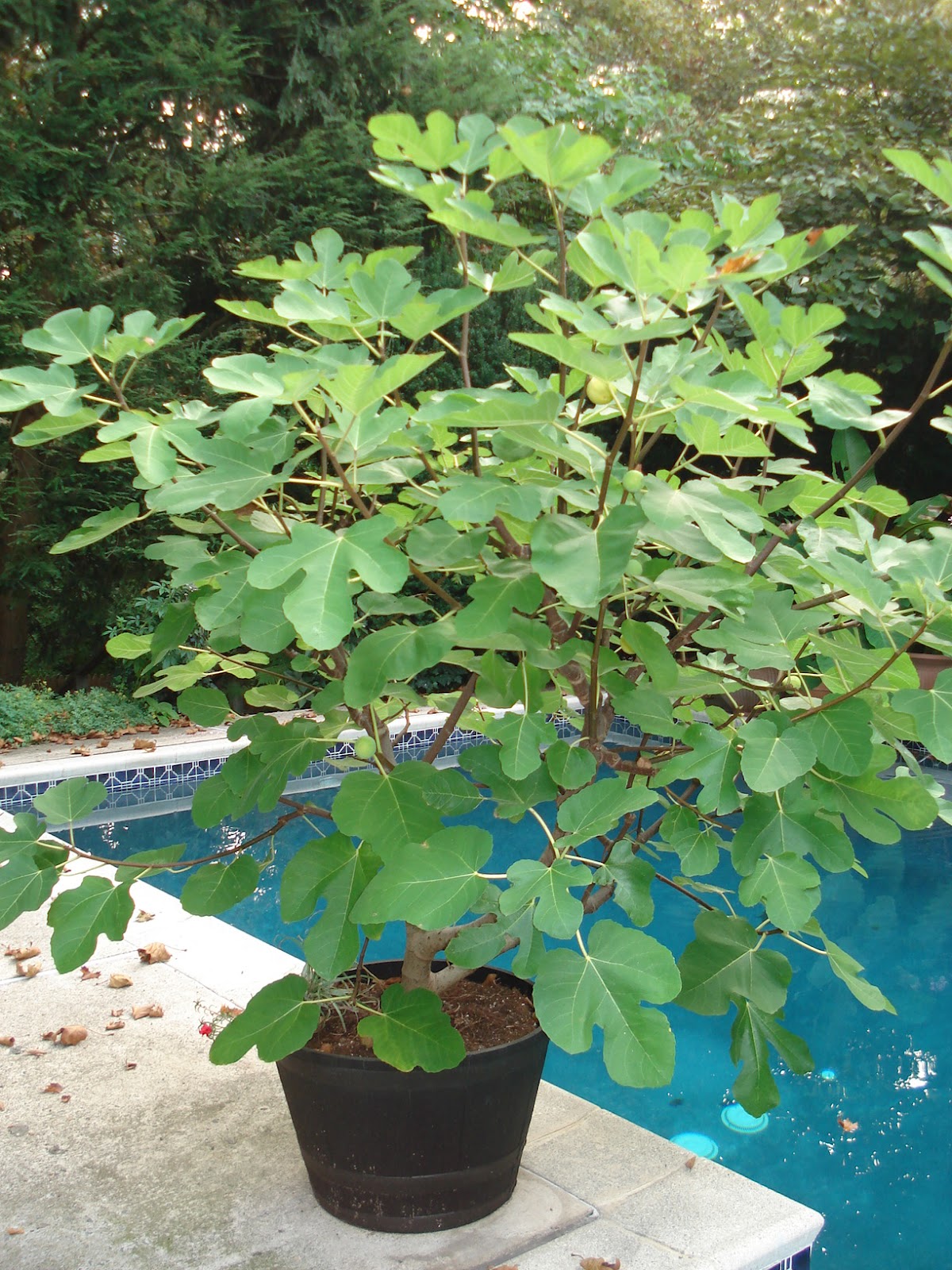
What is more delicious than a beautiful, luscious, lemony- colored fig, sliced in half, drizzled lightly with  honey and served with a bit of creamy gorgonzola? It is a dessert fit for the gods.With a minimum of trouble, figs can be part of your everyday menu in late August and early September. The common edible fig (Ficus carica), a deciduous shrub or tree depending on pruning, is easy to grow here in Philadelphia, either in the ground or containers.

There are over 200 fig cultivars grown in North America with a variety of fruit shapes and colors. What we commonly refer to as fruits are botanically not fruits at all but fleshy growths in which tiny flowers and fruits form when polinated by an itty-bitty specialized fly from the Mediterranean where figs are native. In selecting a fig for your garden, be certain to choose one that is self-pollinating . Most nurseries will only carry such cultivars. Figs are zone 8-10 plants if grown unprotected in the winter. Knowing that, you have two choices: plant in the ground and be prepared to winter wrap or grow in a container. Figs like a sunny location and require moist, well-drained soil that is slightly acidic. If you decide to plant in the ground, choose a cultivar that is adapted to cooler temperatures. 'Brown Turkey', 'Chicago' or 'Celeste' are good choices. Planting in containers and moving them indoors for the winter widens your choices in cultivars.

Ficas carica 'Orphan'
Wrapping in-ground plants for the winter should be done well after leaf drop when the first inch or two of soil begins to freeze. Prune any unnecessary branches, carefully pull the plant together tightly,  wrap with heavy paper, burlap or plastic and tie it together. Cover the bundle with straw and cover again with plastic. Make sure that water cannot enter the top. This is clearly a two person job. The wrapping should be removed in the early spring when the trees in your neighborhood are beginning to bud. Frankly, this process has always been more work than I am willing to do. Growing in containers seems much easier to me.

Ficas carica 'Niger'
Given how quickly figs grow -- my two "babies" can put on over three feet each growing season -- it is best to choose a large container with good drainage holes. Plastic is preferable to clay as figs like evenly moist soil. Plastic pots are also lighter in weight which can be an issue when moving the plant indoors for the winter months. A good quality potting mix with added compost will work just fine. A top dressing of compost will help maintain moisture. Figs fruit best when placed in a sunny location. I feed my figs about once a month with liquid seaweed, following the directions on the package. Avoid high nitrogen fertilizers as they will encourage foliage growth, not fruiting. I prune my figs hard every year in the late fall once the leaves have all dropped and the outside temperatures are cool enough that the plants are dormant. In addition, I root prune the plants every two years in the early spring before the new growth begins. Container grown figs in Philadelphia will need to be brought indoors for the winter. If you are lucky enough to have a greenhouse, you can bring them inside and have them stay green all winter. They may even bear fruit for you. Those of us that are not so lucky need to find a cool, relatively dark space to winter our plants. A garage where the temperature does not go below freezing will work. Or perhaps you can easily access an unheated basement to store the containers. Bring the containers in once the fig leaves have all dropped.  Plants that are stored in garages or basements will need a minimum amount of water during the winter months. It is wise to check them every so often to make certain that they have not completely dried out.

When the trees in your garden or on your block begin to show buds in the spring, it is time to haul those dormant figs out of the basement or the garage, place them in their summer home and dream of all the wonderful dishes you will be preparing at harvest time in the late summer. Well.... that is if those figs actually make it to the kitchen. I usually just pick and eat them immediately!!

Lois Fischer