Showing posts with label organic mulch. Show all posts

Thursday, May 22, 2014

Late Spring Tasks for the Vegetable Garden

Sherrilyn M. Billger

All vegetable gardeners want a successful harvest, and I’ve found that no time is more pivotal than the first month or so after planting. This is when our seedlings take route, and establish a strong foundation for future growth. I spend more time in my garden in spring than any other time of year, and it always pays off. Here’s a list of late spring tasks that will benefit your organic vegetable crops.
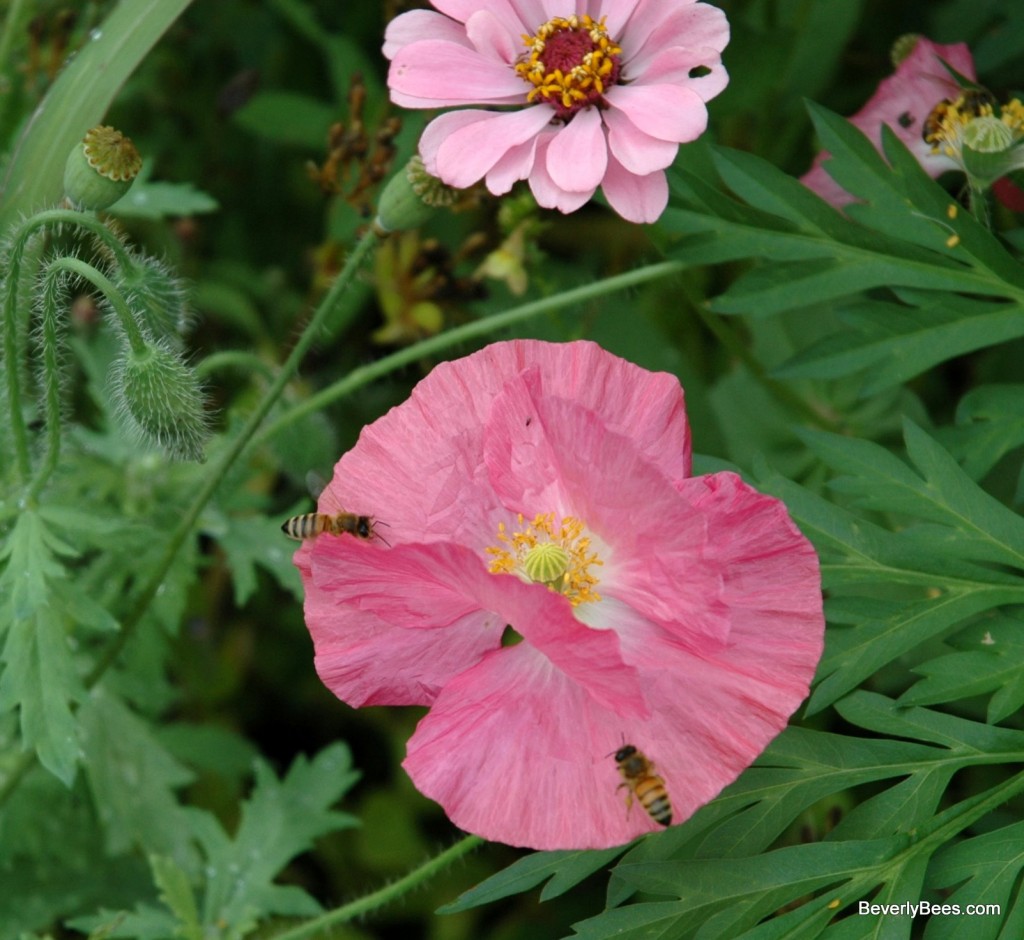

1. Attract pollinators

Many of our vegetable plants already attract bees and butterflies, but we can supplement these with flowers like Echinacea, bee balm (Monarda), poppies, zinnias, yarrow, and sunflowers, among others.  And I like to grow common milkweed (Asclepias syriaca) to attrach Monarch butterflies, and bronze fennel to attract Swallowtails. It’s also a good idea to include a shallow water source for the pollinators. And if you’re committed to attracting pollinators, you could get your garden certified.

2. Protect your vegetables from critters

I live in central city Philadelphia, but my vegetable garden lives in rural Berks county (zone 6b). I see no deer or groundhogs in my neighborhood, but they certainly frequent the neighborhood around my garden. The local rabbits are quite voracious as well. So I’ve installed simple 8-foot long 2x4 posts (not pressure-treated) and plastic deer fencing. I added heavy logs around the perimeter to prevent the rabbits and groundhogs from sneaking under the deer fence. I’ll have to keep an eye on my fence throughout the growing season, because those critters are crafty, and just might find/dig/gnaw a way through or around my fence. Vigilance is key.

3. Weed and Mulch

As they establish themselves, our vegetable plants compete with weeds for sun and water and soil nutrients. My garden is host to a seemingly endless army of thistles and wild onions. Until my vegetables are large enough to shade competitors, I need to weed frequently. I also use mulch to keep the soil moist and discourage weeds. Some gardeners use inorganic materials, but I prefer organic mulch. It doesn’t keep every weed out, but it will slowly decompose and further nourish my soil.

You might consider red plastic mulch for your tomatoes. Penn State scientists found that red mulch increased tomato harvest by 10 percent, on average.  To keep the weeds at bay and encourage a better tomato harvest, staple red mulch to black mulch and lay it on the ground red side up. The easiest time to do this is before you plant your seedlings, but you could also lay it after planting, and create cut-outs for your tomatoes to poke through.

4. Erect plant supports

If you haven’t yet done so, now is a great time to install plant supports.  Putting off this task will leave you wrestling with large plants, and you’ll risk breaking the stems and damaging the roots. Supports are particularly important for peas, pole beans, and tomatoes. I also like to provide supports for my cucumbers, and occasionally for my pepper plants. Garden supply stores offer a wide variety of stakes, teepees, and cages, but you can also make your own. In order to keep your garden chemical-free with natural materials, choose bamboo, cedar, cypress, and jute twine. I use jute twine throughout my garden, because I can toss it in my compost pile in the fall.

There are many ways to support your tomatoes. As a beginner gardener, I used the ubiquitous metal cages, but now I’ve graduated to the Florida weave.  It is a simple method, and requires stakes and twine. If your garden is in a windy area, put stakes between each plant and at the end of the rows. Use fewer stakes if wind isn’t such an issue for you. Begin your first weave about 6 inches from the ground, securing the twine to one end and gently weaving the twine through the row, next to each plant. After you get to the end of the row, finish the weave back to the end where you started and tie it off.  Add a new row of twine every week or so. (Side note: I grow indeterminate heirlooms, so I plan to prune my tomato plants throughout the season. Even with the Florida weave, the plants will get too tall eventually.)

5. Make frequent inspections

Organic vegetable gardening is actually really easy. The biggest time commitment comes in the spring, but the summer and fall payoff is truly worth it. Take a little extra time now to nurture the plants and help them set a strong foundation. The absolute best thing you can do for your garden now and throughout the growing season is to walk around and look at the plants. How are they doing? Are they getting enough sun and water? Do you see any evidence of disease or insect damage? Catch it early, and your plants are likely to recover. If you find something strange or troubling in your garden, don’t hesitate to contact the Master Gardeners. We’re here to help!


Thursday, November 15, 2012

What to do with all those leaves?

The leaves are falling and the yearly cleanup begins. What strategies are the best to use the leaves in your garden.

1. Discard all leaves of diseased trees or plants from the garden. Do not add them to the compost. Instead, throw them out with the garbage.

2. Masses of leaves should not be allowed to overwinter on your lawn. They will compact and deprive the grass of light and air. Remove the leaves and use them as mulch or add them to your compost pile OR mow them. If you do not have a tremendous amount of leaves, mowing them weekly until they have finished falling will give your lawn nutrients and will provide some shade preventing weeds from growing.

3. Use whole leaves as mulch around plants that have just been planted. The leaves will keep the soil warm and give the roots time to get established. (Leaves should never be placed close to the base of a tree or shrub. It should be a minimun of 6"to 8" away)

3. Use leaves across your gardens bare soil to prevent erosion during the winter.

4. Apply them to established gardens to prevent the soil from freezing and defrosting "heaving" in the winter and premature warming in the spring.

5. Shredding the leaves hastens the process for use as mulch or compost in your garden giving you a dark rich high carbon material.

6. Contact your municipality for information on leaf pick up or drop off . They often shred and make compost to be used in public gardens or provide the community with compost in the spring.
For information on The City of  Philadelphia leaf drive:        Leaf Drive Q&A     Leaf Drive City

7. Finally.........use those beautiful leaves to give artful color to your fall decorating or Thanksgiving Ttable.


Thursday, June 14, 2012

What Mulch Is All About


By Brian Olszak 

An old growth forest
“Mulch” is a very inclusive term. A mulch can generally be any material, either organic or inorganic, which performs the following functions: reduces moisture loss in soil, suppresses weeds, and helps to regulate temperature extremes. No doubt, as well, many people mulch their beds so as to make them look neat and tidy. In reality, we’re really trying to emulate conditions in nature, and reproduce them in our own gardens. If you walk through a mature-growth forest with very tall, straight trees, especially this time of year, you will find a lot of pine needles, twigs, and leaves that have fallen to the forest floor. What you won’t find is a lot of grass or weeds, at least the types which we typically deal with in our gardens. This is because when all of this dead and decaying matter becomes matted down, it provides a natural layer which both blocks any undergrowth and retains moisture for the roots of trees. Another contributor to this is the extensive tree canopy, which monopolizes most of the sunlight, further preventing undergrowth. A big bonus of this process is that all of this dead and decaying matter provides excellent nutrition for plant life and builds the soil structure.

Bark mulch is available shredded (above) and in chips or "nuggets"
Mulches can be broken down into two main categories: organic and inorganic. The best choice of mulch for your garden or landscape, of course, depends on what you are growing.

The most obvious choices to emulate nature would be organic, wood-based mulches, which, not coincidentally, are the most common of mulches. Bark mulch is from shredded bark, while wood chip mulch is made from all the spare parts of industrially-logged trees or trees removed during construction. Bark mulch and wood chip mulches work for both vegetable and flower beds. But freshly-shredded, their nitrogen content is so low that nitrogen is leached from the surrounding soil in order to facilitate the decomposition process—which means less nitrogen is available to your plants. It is important, therefore, that these kinds of mulches have been properly composted first before use in gardens: freshly-shredded wood chips can be used on trails or walking paths instead, or left for a few months before use in gardens. In addition, it is important to not over-mulch with wood chips, as the temptation to replenish old and discolored wood chips might be too great. Over-mulching can bury root systems too deep, making water penetration much more difficult if not impossible. In the case of trees, beware of the "mulch volcano": the mounding of mulch around the trunk. This practice can cause a number of troubling conditions, including the rotting of bark and roots, places for voles and other critters to shelter and nibble on your tree, among other things.

Straw mulch is great for potatoes (above) and strawberries
Other kinds of organic mulches include straw, pine needles, and shredded leaves. Straw is a good cover for vegetable gardens and for overwintering beds, which protects tender and sensitive roots from freezing out. Pine needles can be used if particular plants need especially acidic soil, such as blueberries.

Inorganic mulches, while not providing organic material and nutrition to your landscape, do have the significant benefit of lasting much longer than most organic mulches, and therefore need less attention from you.

Landscape fabric can be cut to suit plants already in the ground
One example of an inorganic mulch is black plastic. Black plastic is very good at retaining moisture and blocking out weed growth, and is an old standby for gardeners, but has many drawbacks. Not only will water have trouble penetrating to the roots below, but the plastic can degrade in sunlight. Landscape fabrics can be a useful complement to an organic mulch in your garden. Typically made of polyester or polypropylene, these barrier fabrics are porous enough to allow water to seep through but are tight enough to prevent weed growth from beneath. You can cut holes in the fabric where you intend to plant. Placing a wood-based mulch on top of this fabric barrier can make your landscape look more natural and while also preventing the ultraviolet rays of the sun from degrading the fabric. However, these barriers can just as easily become a nuisance if weeds begin to establish above the fabric layer—this can happen when a wood-based mulch decomposes into soil where weed seeds can germinate. If you simply throw more mulch on top of this new soil layer, you will hit new levels of aggravation while trying to dig through the buried fabric when planting the next season! This can be avoided by removing old mulch and replacing it with new mulch every year. Don’t know what to do with the old mulch?—compost it! Several kinds of stones and gravels, including pea stone, can also be used for a more decorative treatment, especially in a perennial garden or for very young trees.
Pea stone can be decorative or functional


Both organic and inorganic mulches have their place in the garden, so do some experimenting, and see what works for you!